


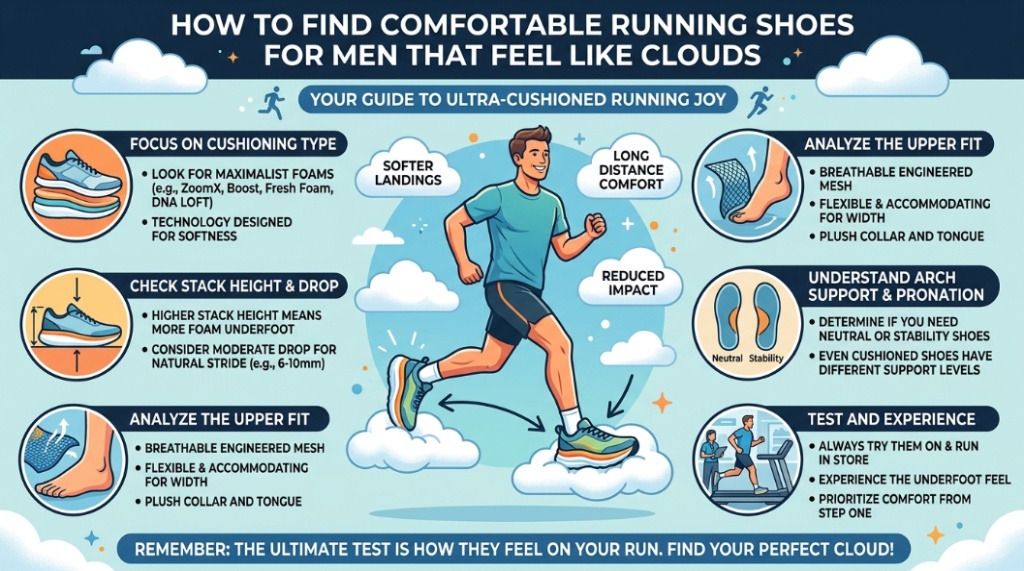
The most comfortable running shoes for men that feel like clouds combine soft cushioning, proper arch support, breathable materials, and a snug heel-to-toe fit that matches your running style and foot shape.
Why Finding the Right Running Shoes Matters More Than You Think
Many runners choose shoes based on appearance or brand reputation, then wonder why their feet hurt after just a few kilometers. The truth is simple: the wrong shoes can lead to discomfort, fatigue, shin splints, knee strain, and long-term injury. Comfortable running shoes for men are not a luxury—they are a requirement for performance and joint protection.
If your shoes feel heavy, stiff, or tight in the toe box, your stride becomes inefficient. Over time, this creates pressure points, reduces endurance, and increases injury risk. On the other hand, cloud-like running shoes improve shock absorption, stabilize movement, and reduce muscle strain.
Comfortable running shoes for men are designed with responsive cushioning, breathable uppers, and supportive midsoles that adapt to your stride. Choosing the right pair transforms running from a tiring task into a smooth, energy-efficient experience.
How do you choose comfortable running shoes for men that feel like clouds?
Choose running shoes with soft cushioning, correct arch support, lightweight construction, and a fit that matches your gait pattern and foot width.
The ideal running shoe depends on biomechanics, surface type, and mileage goals. Comfort is not universal. A shoe that feels perfect for one runner may cause discomfort for another.
Key comfort factors to evaluate before buying
- Cushioning level (foam density and responsiveness)
- Arch support alignment
- Heel lockdown stability
- Toe box width
- Breathability
- Weight of the shoe
- Flexibility at forefoot
Modern midsoles use EVA foam, TPU blends, or nitrogen-infused compounds to reduce impact stress. Research published in sports biomechanics journals shows proper cushioning can reduce joint loading by up to 15% during repetitive impact activities like running.
What cushioning type makes running shoes feel like clouds?
Soft yet responsive foam cushioning provides the closest “cloud-like” running experience because it absorbs shock without slowing your stride.
Not all cushioning performs equally. Some shoes feel soft when walking but unstable during running. The best models balance softness with energy return.
Popular cushioning technologies used today
- EVA foam midsoles
- Nitrogen-injected cushioning
- Gel-based heel inserts
- Air pocket cushioning systems
- TPU energy-return foam
Energy-return foam improves propulsion efficiency, especially during long-distance runs. This reduces fatigue across calves and quadriceps.
How important is arch support in comfortable running shoes for men?
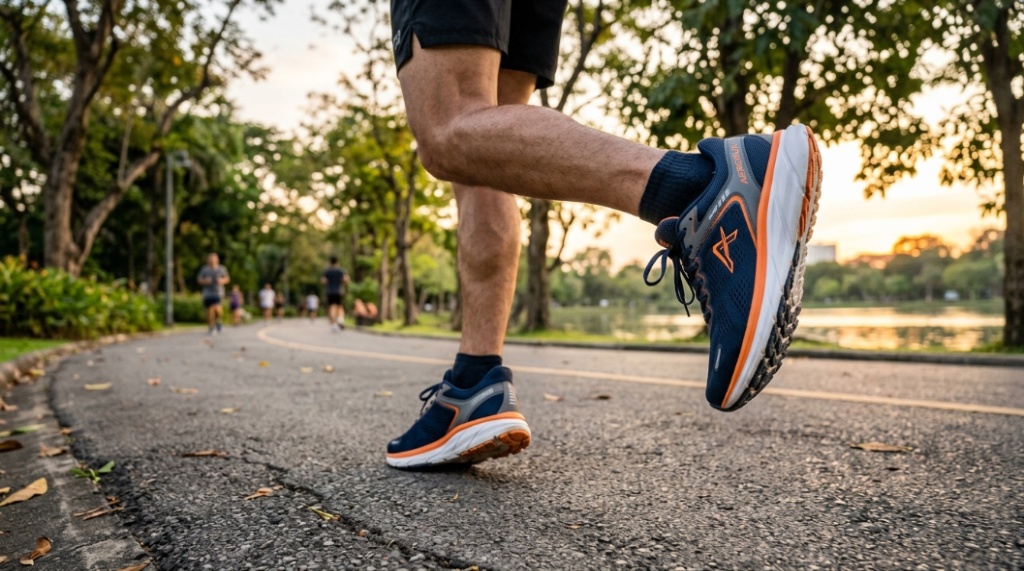
Arch support prevents overpronation or underpronation, helping distribute impact evenly across the foot.
Improper support forces ankles inward or outward, increasing stress on knees and hips. Motion-control shoes help runners with flat feet, while neutral shoes work best for balanced gait patterns.
Types of arch categories runners fall into
- Low arch (flat feet)
- Neutral arch
- High arch
Understanding your arch type ensures correct alignment during ground contact and push-off phases.
How should running shoes fit for maximum comfort?
Running shoes should feel snug around the heel, flexible at the forefoot, and leave about a thumb’s width of space near the toes.
Poor fit remains the leading cause of discomfort complaints among runners. According to footwear research surveys, nearly 60% of runners wear incorrectly sized shoes.
Checklist for proper fit
- No heel slipping while walking
- No toe compression
- Midfoot secure but not tight
- No pressure points
- Comfortable flex near toe joints
Always test shoes in the evening when feet naturally expand slightly.
Are lightweight running shoes more comfortable?
Lightweight running shoes reduce fatigue and improve stride efficiency, especially during longer distances.
Heavier shoes increase energy expenditure per step. Over a 5 km run, even a small difference in shoe weight can noticeably affect endurance.
However, extremely lightweight shoes sometimes sacrifice cushioning. The best choice balances support and weight.
What upper materials improve comfort in running shoes?
Breathable mesh uppers improve airflow, reduce sweating, and prevent friction-related blisters.
Modern engineered mesh adapts to foot shape while maintaining structure. Knit uppers provide flexibility, while synthetic overlays add stability.
Comfort-enhancing upper materials
- Engineered mesh
- Stretch knit fabric
- Seamless overlays
- Moisture-wicking lining
Proper ventilation helps regulate temperature during longer sessions.
Do running surfaces affect which shoes feel most comfortable?
Yes, road, trail, and treadmill surfaces require different cushioning and traction features.
Road running shoes prioritize shock absorption, while trail shoes emphasize grip and protection from uneven terrain.
| Surface Type | Recommended Cushioning | Traction Level | Flexibility |
|---|---|---|---|
| Road | High | Moderate | High |
| Trail | Moderate | High | Medium |
| Treadmill | Moderate | Low | High |
Choosing surface-specific footwear improves long-term comfort and durability.
How do you know if a running shoe has enough shock absorption?
A well-cushioned shoe reduces heel impact without making the stride feel unstable or overly soft.
Test shock absorption by walking and lightly jogging. The landing should feel smooth rather than sharp.
Advanced foam compounds now reduce vertical loading rates, helping prevent stress injuries common among distance runners.
Can wide toe boxes improve running comfort?
Wide toe boxes allow natural toe splay, improving balance and reducing pressure points.
Narrow shoes restrict movement and increase blister risk. Runners with broader forefeet benefit significantly from roomier designs.
How often should comfortable running shoes be replaced?
Most running shoes should be replaced every 500 to 800 kilometers to maintain cushioning performance.
Over time, midsoles compress and lose responsiveness even if the exterior looks intact.
Signs your shoes need replacement
- Heel pain after runs
- Flattened midsole foam
- Uneven outsole wear
- Reduced responsiveness
Rotating between two pairs extends lifespan and improves recovery comfort.
Are expensive running shoes always more comfortable?
Higher price does not guarantee comfort, but premium models often include advanced cushioning and durability technologies.
Comfort depends more on fit and biomechanics than cost alone.
Many mid-range performance shoes provide excellent cushioning comparable to flagship models.
What features should beginners prioritize in comfortable running shoes?
Beginners should prioritize cushioning, stability, and proper sizing over speed-focused performance features.
Entry-level runners benefit most from neutral cushioning shoes with breathable uppers and flexible midsoles.
Beginner-friendly comfort priorities
- Soft heel landing support
- Stable midfoot platform
- Breathable upper construction
- Moderate weight design
These features reduce early-stage injury risk and improve consistency.
Do insoles improve comfort in running shoes?
Yes, aftermarket insoles can enhance arch support and pressure distribution for personalized comfort.
Custom orthotic insoles help runners with plantar fasciitis or alignment issues.
Even standard foam inserts can increase cushioning effectiveness when properly matched to foot shape.
How do breathable running shoes prevent discomfort during long runs?
Breathable running shoes regulate internal temperature and reduce moisture buildup that causes blisters.
Ventilation channels allow airflow during motion, improving long-distance comfort.
This becomes especially important in warm climates or humid environments.
What makes a running shoe feel “cloud-like” during long-distance runs?
A cloud-like feel comes from responsive foam midsoles, smooth heel-to-toe transitions, and flexible forefoot geometry.
These features reduce cumulative fatigue during extended mileage sessions.
Runners training for half-marathons or marathons benefit most from balanced cushioning systems.
Conclusion: How to Choose the Right Comfortable Running Shoes for Men
Comfortable running shoes for men that feel like clouds combine proper cushioning, breathable materials, supportive midsoles, and a personalized fit aligned with your gait pattern. No single shoe works for everyone, but understanding cushioning types, arch support needs, and surface compatibility makes selection easier.
The most effective strategy is to evaluate your running style, mileage goals, and terrain before choosing footwear. Replace shoes regularly, test them under realistic conditions, and prioritize fit over brand reputation.
When you choose the right pair, running becomes smoother, safer, and more enjoyable. Investing in comfort today protects your performance tomorrow.
FAQ: Comfortable Running Shoes for Men
What are the most comfortable running shoes for men with flat feet?
Stability running shoes with structured arch support help flat-footed runners maintain alignment and reduce overpronation-related strain.
How tight should running shoes feel when first worn?
Running shoes should feel secure around the heel and midfoot but leave space for toe movement to prevent pressure buildup during runs.
Are cushioned running shoes better for knee pain?
Yes, cushioned midsoles reduce impact forces transmitted to the knees, helping minimize stress during repetitive running motion.
Can running shoes improve performance as well as comfort?
Properly fitted running shoes improve stride efficiency, reduce fatigue, and support consistent pacing over longer distances.
Should running shoes be one size bigger than normal shoes?
Most runners benefit from slightly larger running shoes to accommodate foot expansion during activity.
Is it okay to use running shoes for walking daily?
Yes, cushioned running shoes provide excellent comfort for walking, though heavy daily use shortens their lifespan.
Do breathable shoes prevent foot odor?
Breathable mesh uppers improve airflow, reducing moisture buildup that contributes to odor formation.
Read More Also How to Get Gum Out of Hair
Discover More: Designing Your Dream Engagement Ring
