


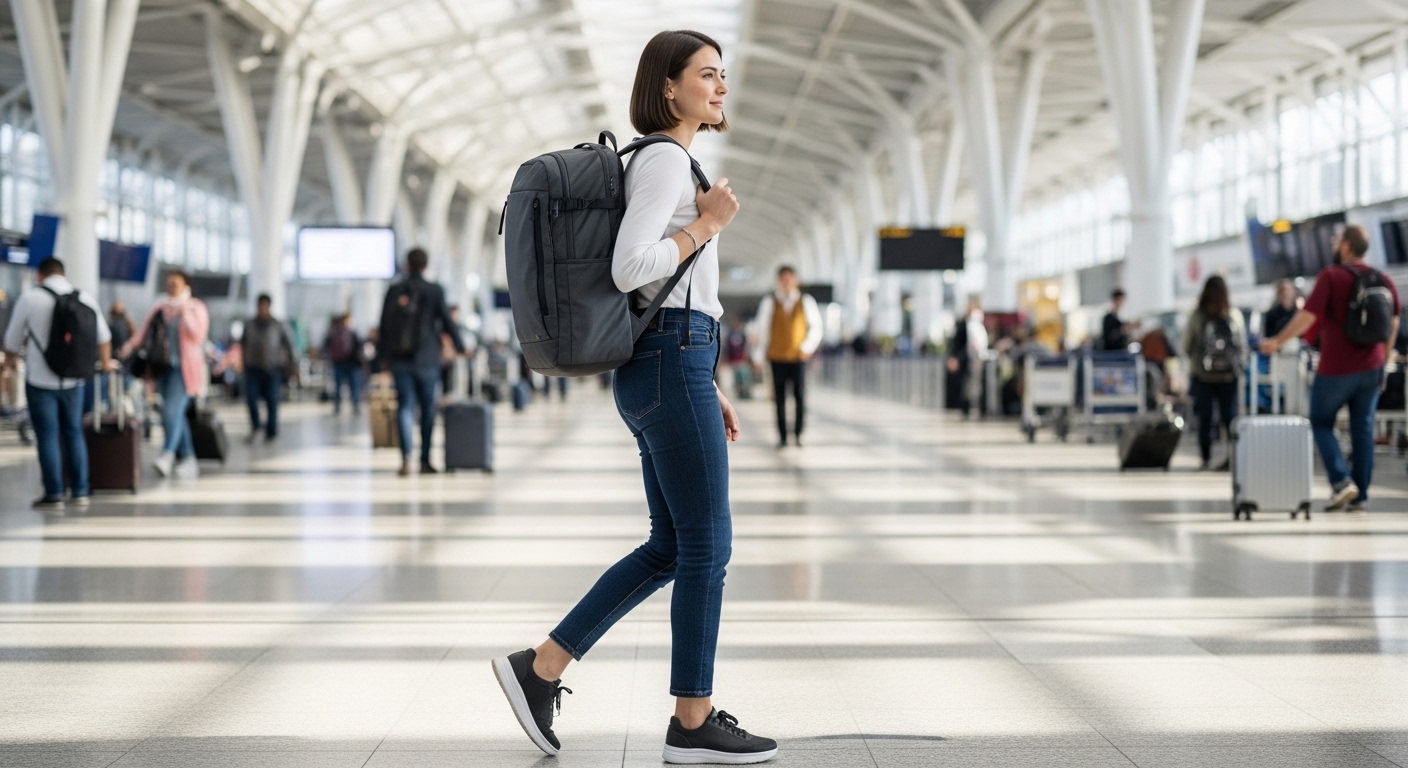
Choosing the right carry-on backpack can transform how you travel. The wrong bag slows you down. It causes stress at security, eats up overhead bin space, and leaves your back aching by the end of the day. The right bag, however, does the opposite. It fits your life, your body, and your itinerary perfectly.
In 2026, travelers have more choices than ever. New materials, smarter designs, and shifting travel gear trends have raised the bar for what a carry-on backpack can do. Therefore, knowing what to look for before you buy has never been more important.
This guide will walk you through every key factor. By the end, you will have a clear picture of what makes a carry-on backpack worth your money.
Why Your Carry-On Choice Matters More in 2026
Airlines have tightened their carry-on rules over the past few years. Many budget carriers now enforce size limits more strictly. Some charge fees for bags that do not fit within their defined dimensions. Therefore, choosing a bag that meets these requirements from the start saves you money and headaches.
Beyond airline rules, travel habits have changed. More people are choosing to travel lighter and faster. They skip checked baggage entirely. They move through airports with confidence, knowing their single bag holds everything they need.
Additionally, the rise of remote work has created a new type of traveler. Many people now work from airports, coffee shops, and hotel lobbies. Their backpack needs to function as both a travel bag and a daily work bag. This dual purpose has driven some of the most exciting design changes in recent years.
Understanding Carry-On Size Restrictions
Size requirements vary by airline, so it is wise to check before you buy. Most major carriers in North America and Europe allow carry-on bags up to 22 x 14 x 9 inches. However, budget airlines often have stricter limits. Some allow as little as 18 x 14 x 8 inches in the cabin without an extra fee.
A good carry-on backpack should fit comfortably within the most common limits. Many bags on the market are designed specifically to pass the standard airline size tests. Look for bags that are clearly labeled as airline-compliant.
Furthermore, the shape of the bag matters. A structured, boxy bag will pack more efficiently than a loose, rounded one. It will also fit into overhead bins and under-seat spaces more reliably.
Capacity: How Much Space Do You Really Need?
Carry-on backpacks typically range from 20 to 45 liters in capacity. The right size depends on how long you travel and how lightly you pack.
For weekend trips of one to three nights, a 20 to 30-liter bag is usually enough. For trips of four to seven nights, look for something in the 30 to 40-liter range. If you tend to pack more or need space for work equipment, a 40 to 45-liter option may serve you better.
However, be cautious about going too large. A bigger bag invites overpacking. It also becomes heavy quickly. Many experienced travelers find that a 30 to 35-liter bag covers almost every scenario when combined with good packing habits.
The Case for Lightweight Backpacks
Weight is one of the most overlooked factors when choosing a travel bag. Most travelers focus on what goes inside the bag and forget that the bag itself adds to their load. A heavy bag with nothing in it is already working against you.
This is why lightweight backpacks have become so popular among frequent flyers. A bag that weighs under two pounds gives you more room in your weight budget for clothes, toiletries, and gear. Additionally, lighter bags are easier to lift into overhead bins and carry through long terminals.
Modern materials have made lightweight backpacks stronger than ever. High-tenacity nylon, ripstop fabrics, and ultra-high-molecular-weight polyethylene are now common in travel bags. These materials resist tears and abrasion while keeping the overall weight low.
Therefore, when comparing bags, always check the listed weight. A difference of even half a pound can have a noticeable effect over a full day of travel.
Key Features to Look for in a Carry-On Backpack
The best carry-on backpacks share a set of features that make travel easier. Here is what to prioritize:
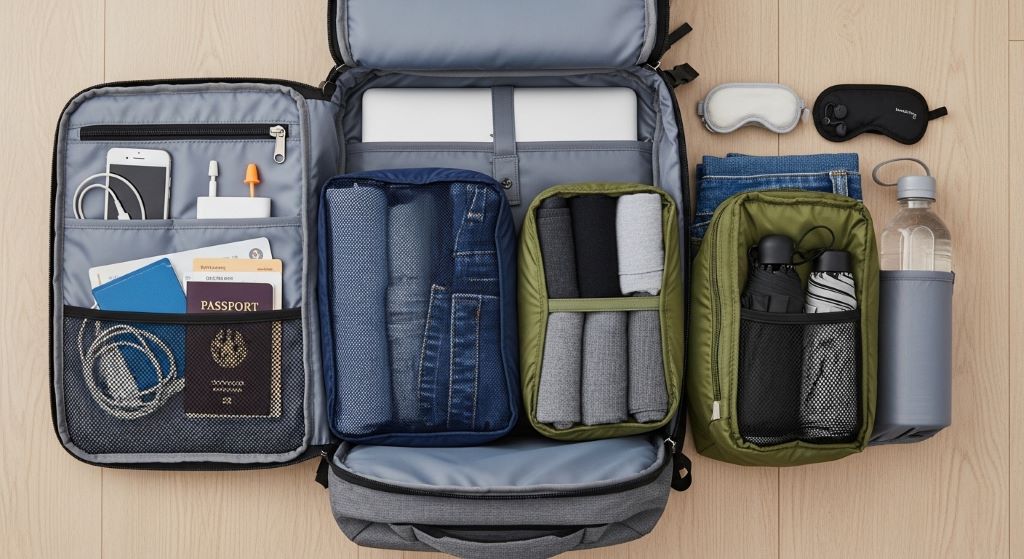
A Dedicated Laptop Compartment
Security lines require you to remove your laptop from your bag at many airports. A dedicated laptop sleeve that opens fully makes this process quick and stress-free. Look for a compartment with a padded bottom to protect your device during impact.
A Clamshell or Panel Opening
Traditional backpacks open from the top, which makes finding items at the bottom a frustrating process. Clamshell designs open fully like a suitcase, giving you clear visibility and access to everything inside. This feature alone can save considerable time and frustration at security.
Hip Belt and Chest Strap
A hip belt transfers weight from your shoulders to your hips, which are much better equipped to carry heavy loads. For bags over 25 liters, this feature significantly improves comfort during long walks through airports or city streets. A chest strap additionally keeps the bag stable while you move quickly.
External Compression Straps
When your bag is not completely full, it can shift and feel unbalanced. Compression straps on the outside allow you to cinch the bag down and keep the load close to your back. This makes the bag feel lighter and more stable overall.
Water Resistance
Travel is unpredictable. Rain can appear without warning. A bag with a durable water-resistant coating or a waterproof cover protects your belongings. Some bags use water-resistant zippers as well, which offer even stronger protection.
Organization Pockets
Quick-access pockets for items like your passport, boarding pass, and phone are essential. Look for a bag with a mix of internal and external pockets. However, avoid bags with too many pockets, as they can fragment your packing and add unnecessary weight.
Travel Gear Trends Shaping Backpack Design in 2026
The backpack market in 2026 reflects some significant shifts in how people travel and work. Understanding the current travel gear trends can help you spot which innovations are genuinely useful and which are simply marketing.
Modular design is one of the biggest movements right now. Some bags allow you to attach and detach smaller pouches, day packs, or hip packs depending on your plans. This makes a single bag far more versatile across different types of trips.
Sustainability is another growing priority. More brands are now using recycled plastics, organic materials, and ethical manufacturing processes. If environmental impact matters to you, there are more responsible options available than ever before.
Anti-theft features have also become standard in many carry-on bags. Hidden zippers, slash-resistant fabrics, and locking zipper pulls are common additions. These features offer peace of mind in crowded airports and busy transit hubs.
Finally, built-in charging solutions are appearing more frequently. Some bags include a USB port that connects to an internal power bank pocket. This lets you charge your phone while you walk without having to dig through your bag.
Comfort and Ergonomics: Do Not Compromise
A bag can have all the right features but still be uncomfortable to wear. Comfort depends heavily on how the bag is built to sit on your body.
Back panel design is critical. Look for bags with ventilated, padded back panels. These allow airflow between the bag and your back, which reduces sweating and fatigue. Some premium bags use tensioned mesh panels that suspend the bag slightly away from your back.
Shoulder strap padding also matters greatly. Straps that are too thin concentrate pressure on a narrow area of your shoulder and cause soreness quickly. Contoured, well-padded straps distribute the load more evenly across your body.
Additionally, look for a bag with adjustable torso length if possible. Most bags are designed for average body sizes, but not everyone fits that mold. An adjustable torso length lets you position the bag for your specific body, which dramatically improves comfort over long distances.
Top Brands to Consider in 2026
Several brands have earned strong reputations for quality carry-on backpacks. Each focuses on a slightly different type of traveler.
- Osprey is known for ergonomic comfort and durable construction. Their Farpoint and Fairview lines are perennial favorites for one-bag travelers.
- Peak Design offers sleek, photographer-friendly bags with clever organization. Their Travel Backpack is one of the most versatile options available.
- Tortuga specializes exclusively in travel bags and builds products around airline size limits. Their Setout and Outbreaker lines are designed from the ground up for carry-on travel.
- Nomatic creates bags for business travelers and digital nomads with a focus on organization and modern aesthetics.
- Cotopaxi and Fjallraven offer sustainability-focused options that appeal to environmentally conscious travelers.
However, do not feel limited to big names. Several smaller brands produce excellent bags at more accessible price points. Reading verified traveler reviews will give you a realistic picture of real-world performance.
How to Test a Backpack Before You Commit
If possible, always try a bag in person before buying. Load it with items similar to what you would actually pack. Then wear it for at least ten to fifteen minutes. Walk around the store. Notice whether the straps dig in, whether the bag bounces, and whether you can reach the zippers easily.
If you are buying online, look for retailers with generous return windows. Many reputable travel gear sellers offer thirty to sixty-day return policies. This gives you time to test the bag on an actual trip before fully committing.
Additionally, watch video reviews from real travelers, not just brand promotional content. Seeing a bag in use, packed to capacity, and tested at airports gives you far more useful information than studio photos.
Price vs. Value: What Should You Spend?
Carry-on backpacks range from under $50 to over $400. The right price point depends on how often you travel and what you need from your bag.
Occasional travelers who take one or two trips a year can find solid options in the $60 to $120 range. These bags will not have every premium feature, but they will perform well for light use.
Frequent travelers who fly monthly or more will benefit from investing in the $120 to $250 range. Bags at this price point tend to use better materials, more thoughtful organization, and more durable hardware.
Premium bags over $250 are typically built for daily heavy use, harsh conditions, or specific professional needs. They are a worthwhile investment if you travel constantly and need a bag that will last for many years.
Therefore, resist the temptation to buy the cheapest option available. A poor-quality bag that breaks or becomes uncomfortable mid-trip costs far more in stress and replacement fees than a moderately priced bag bought once and used well.
Conclusion
Choosing the best carry-on backpack in 2026 comes down to understanding your own travel style and knowing which features truly matter. Size compliance, weight, comfort, and organization are the foundations of a great travel bag.
The shift toward lightweight backpacks reflects a broader movement in how smart travelers approach their journeys. Less weight means more freedom, faster movement, and less fatigue. Additionally, keeping up with current travel gear trends helps you identify innovations that genuinely improve your experience without adding unnecessary cost.
Take your time with this decision. A great carry-on backpack is an investment in every trip you take from this point forward. When you find the right one, you will wonder how you ever traveled without it.
Frequently Asked Questions
1. What is the best size carry-on backpack for most travelers?
A 30 to 40-liter backpack works well for most travelers. It is large enough for trips of three to seven nights and compact enough to fit within standard airline carry-on limits. If you pack light consistently, a 25 to 30-liter bag can handle even longer trips.
2. Can a backpack really replace a carry-on suitcase?
Yes, absolutely. Many experienced travelers use a well-chosen backpack as their only bag for trips lasting a week or more. The key is choosing a bag with smart organization, good capacity, and ergonomic support. With the right packing strategy, a backpack is often more practical than a wheeled case.
3. How do I prevent my carry-on backpack from being gate-checked?
Choose a bag that fits within the airline’s stated dimensions. When packing, avoid overfilling the bag to the point where it cannot compress. Arrive early to board before the overhead bins fill up. Additionally, familiarize yourself with the specific size gauge posted at your departing airline’s check-in counter.
4. Are anti-theft features in backpacks worth it?
Anti-theft features provide added peace of mind, particularly in busy airports, transit hubs, and tourist areas. Hidden zippers and slash-resistant panels can deter opportunistic theft. However, they are not essential for every traveler. If you frequently visit crowded or high-risk environments, they are a worthwhile addition.
5. How do I clean and maintain a travel backpack?
Most travel backpacks should be spot-cleaned with a damp cloth and mild soap. Avoid machine washing unless the manufacturer specifically allows it, as this can damage the water-resistant coating. Air dry thoroughly after cleaning. Periodically re-apply a DWR spray to restore the water resistance on older bags.
Related Topics:
How to Get Hydraulic Fluid Out of Clothes: A Detailed Guide
How to Make Jeans Waist Smaller: A Comprehensive Guide
