



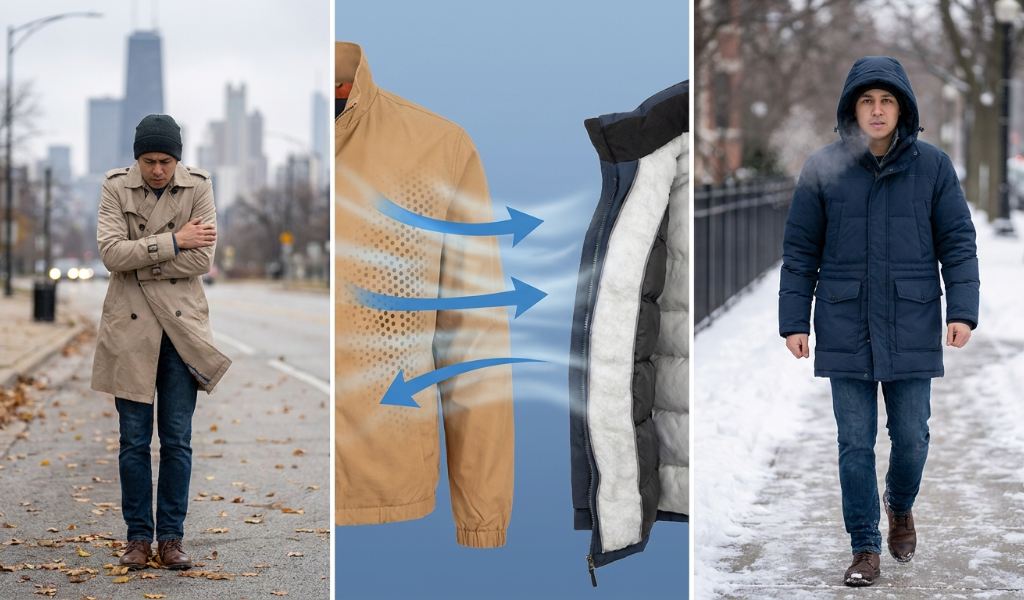
Your autumn coat feels cold in Chicago because biting lake winds penetrate porous fabric weaves easily. In addition, unsealed cuffs, open lapels, and lacking thermal linings cause rapid convective heat loss. Layering windproof membranes beneath wool outers restores essential thermal retention across blustery city blocks.
Chicago encounters intense seasonal gusts known as the lake effect wind chill. Climatological data indicates autumn wind speeds along Lake Michigan routinely average twenty-two miles per hour. Furthermore, sustained wind exposure drops apparent skin temperatures by up to fifteen degrees within minutes.
Downtown pedestrians quickly discover that standard autumn overcoats fail against penetrating gusts. Mastering dynamic fall season layering strategies ensures proper insulation against sudden and harsh Midwestern cold fronts. Understanding air permeability prevents uncomfortable chills during outdoor walks.
Key Takeaways
- Convective Wind Stripping: Lake winds displace warm air cushions trapped within garment fibers rapidly.
- Fabric Air Permeability: Porous wool weaves lack windproof membranes required to block urban drafts.
- Critical Seal Points: Open lapels, loose hemlines, and unbuttoned cuffs vent warm torso air.
- Mid-Layer Insulation: Compact down vests and boiled wool sweaters trap warmth beneath coats.
- Windproof Barrier Defense: Wind-resistant shell layers prevent penetrating drafts from reaching your skin.
The Aerodynamics of Lake Michigan Wind Chills
Chicago’s distinctive urban grid creates powerful wind tunnel corridors between towering downtown skyscrapers. Cold air masses sweeping across Lake Michigan accelerate as they funnel down Michigan Avenue. Consequently, pedestrians encounter sudden gusts exceeding thirty miles per hour at street intersections.
Wind chill accelerates human convective heat loss dramatically. Under calm conditions, your body warms a microscopic air envelope directly against your skin. However, fast-moving lake winds strip this protective warmth away continuously. Without a windproof barrier, your body exhausts metabolic energy trying to reheat cold air.
Standard fashion coats prioritize visual silhouette over aerodynamic wind protection. Open-weave wool bouclé and unlined twill fabrics offer virtually zero resistance to fast air currents. You feel cold not because ambient temperatures are freezing, but because wind blows straight through your coat.
Fabric Permeability and Weave Vulnerabilities
Fabric breathability remains desirable during mild exercise, but high air permeability invites severe chills. Inspecting coat fabric against bright backlighting reveals countless microscopic gaps between woven yarns. Pressurized wind currents push effortlessly through these loose gaps.
Traditional single-breasted coats also create gaping front closures that invite drafts. Fastening buttons leaves wide spaces between buttonholes where cold air enters easily. Choosing the best mens shirts in dense Oxford cotton adds valuable wind resistance beneath coats. Proper base garments provide essential secondary defense against penetrating drafts.
Double-breasted coat designs provide substantially better wind defense across your chest. The overlapping front panels create a double layer of cloth over vital organs. Adding storm flaps and secure throat tab latches further prevents wind penetration. Small structural tailoring details yield immense warmth improvements.
The Importance of Sealing Garment Escape Points
Warm air naturally rises and escapes through unsealed openings around your neck and shoulders. Wide, open notched lapels expose delicate neck skin and upper chest areas to cold blasts. Wearing heavy infinity scarves seals this chimney effect and locks warm air inside.
Sleeve cuffs represent another major thermal vulnerability on standard autumn coats. Loose, unbuttoned coat sleeves function like air scoops as you walk forward against the wind. Elegant accessories like best clutch bags complement tailored styles, but keeping hands warm requires snug cuff closures. Inserting storm cuffs or wearing gauntlet gloves stops cold drafts traveling up your arms.
Hemline length also dictates overall lower body warmth during blustery walks. Short waist-length jackets leave your lower back and hips exposed to swirling ground drafts. Knee-length overcoats shield your thighs and maintain warm thermal air pockets around your core.
Inspecting Construction and Lining Quality
A coat’s internal lining plays a critical role in blocking wind infiltration. Cheap polyester linings are thin and often tear along interior shoulder seams. High-quality coats incorporate dense viscose or wind-resistant interlinings between outer shell and inner lining.
Evaluating garment construction resembles steps taken to verify designer purse authenticity during luxury consignments. Buyers must examine interior stitching, fabric density, and lining composition carefully. Inspecting coat interiors reveals whether garments possess true thermal interlinings or merely cosmetic shells.
Look for coats featuring quilted Thinsulate or lightweight wool batting beneath the silk lining. These hidden insulating layers trap stagnant air pockets without adding bulky exterior volume. Quality construction keeps you toasty while maintaining a sharp, tailored silhouette.
Building an Impenetrable Urban Layering System
Defeating Chicago winds requires a multi-tiered layering approach rather than relying on one coat. Begin with an ultra-thin moisture-wicking base layer against your skin. Next, add a lightweight thermal mid-layer like a cashmere sweater or compact down vest.
The down vest serves as an impenetrable wind blocker over your chest. Because vests are sleeveless, they keep core organs warm without crowding your coat sleeves. Drape your tailored autumn overcoat on top to complete an impervious cold-weather shield.
| Layer Level | Primary Function | Ideal Material Choice |
|---|---|---|
| Base Layer | Moisture management and skin insulation | Merino wool or brushed microfiber |
| Mid Layer | Thermal heat trapping and core warmth | Cashmere knit or packable down vest |
| Outer Coat | Wind deflection and structured style | Heavy wool melton with dense lining |
| Thermal Seal | Seals collar, cuffs, and neck openings | Dense woven wool or silk-lined scarf |
Autumn Outerwear Mistakes to Avoid
Avoid buying unlined wool coats for late autumn commutes in Chicago. Unlined garments allow biting lake gusts to chill your spine within seconds of stepping outside. Always choose outerwear featuring sturdy, wind-resistant interior linings.
Do not wear loosely woven knits as your sole outerwear piece on windy days. Chunky cable-knit cardigans look cozy indoors but behave like open mesh against urban winds. Reserve loose knits for indoor lounges or wear them beneath tightly woven coats.
Never leave home without proper neck and head protection during autumn months. Up to twenty percent of human body heat escapes through an unprotected head and neck. Stashing a compact merino beanie and cashmere scarf inside your coat pocket ensures constant warmth.
Windproof Autumn Commute Checklist
Mastering urban cold-weather commuting requires proactive wardrobe preparation and thoughtful layering choices. Review your outerwear setup before stepping onto blustery Chicago avenues. Use this practical preparation checklist to guarantee complete warmth throughout the autumn season:
- Fasten all front coat buttons securely to prevent open wind gaps.
- Wrap a dense wool scarf snugly around your collar to block drafts.
- Button sleeve cuff tabs tightly to seal out cold wrist drafts.
- Layer a slim down vest beneath your overcoat for core heat retention.
- Wear leather gloves featuring knit storm cuffs to protect your fingers.
- Confirm your overcoat features a full interior wind-blocking lining.
Conclusion
Your autumn coat feels cold in Chicago because penetrating lake winds easily breach unsealed and permeable fabrics. Fast-moving wind funnels down city streets, stripping your body’s delicate warmth within minutes. Sealing sleeve cuffs, wrapping scarves, and wearing windproof mid-layers completely restores your comfort.
Take charge of your urban commute by upgrading your seasonal layering system today. Invest in a wind-resistant mid-layer vest and high-density wool accessories right now. Walk Chicago avenues in complete, stylish warmth all season long.
Frequently Asked Questions
Why does Chicago wind make coats feel colder than actual temperatures?
Fast winds blow away the warm boundary layer of air that your body naturally produces.
Are unlined wool coats warm enough for late autumn in Chicago?
Unlined wool coats lack wind barriers and permit cold air to blow directly through the weave.
How does a down vest improve an autumn coat’s warmth?
Down vests insulate your core organs and block wind without adding bulky restriction to your sleeves.
What is the best way to seal an open coat collar?
Wrapping a tightly woven wool or cashmere scarf around your neck blocks cold downward drafts.
Can cotton shirts help protect against wind chill beneath coats?
Dense cotton shirts provide modest wind resistance, but pairing them with wool mid-layers provides superior warmth.
