



It is 10:42 AM on a Tuesday. You are juggling a coffee, a toddler who just spotted a toy train, and a diaper bag that feels like it is packed with bricks. Your back aches, your shoulder is numb, and you are mentally preparing for the inevitable “I need to find the wipes” dive. The problem is not your toddler; it is your gear. You are overpacking for a two-hour errand run, and it is exhausting you before you even leave the driveway. The solution is not to carry less; it is to carry smarter with a mini diaper bag for everyday errands. This guide will show you exactly how to downsize without the panic of missing a critical item, turning chaotic trips into smooth, lightweight adventures.
What Defines a Mini Diaper Bag and Why Is It Enough?
A mini diaper bag is a compact carrying solution (typically under 10 liters) designed to hold only the absolute essentials for a short outing—usually 2 to 4 hours. It is not a smaller version of your main bag; it is a strategic tool for a specific type of trip. For everyday errands like grocery shopping, coffee dates, or picking up dry cleaning, this size is not just enough; it is actually superior to a full-size backpack because it forces you to curate your load, reduces physical strain, and speeds up access times.
The Core Philosophy: Packing for “What If,” Not “Just in Case”
Most parents overpack because they are terrified of being caught without a change of clothes or a full pack of wipes. However, for a 2-hour errand, the likelihood of a blowout requiring a full outfit change is low, but the likelihood of a wet wipe shortage is high. A mini bag forces you to shift from “just in case” to “what if,” which covers 90% of real-world scenarios. You bring one outfit change, not three; a travel wipe case, not the entire bulk pack.
Why “Small” Feels Lighter (And Saves Your Spine)
A full bag encourages you to fill it. A mini bag has hard limits, preventing the “pack-rat” effect. Studies in ergonomics suggest that carrying less than 10% of your body weight drastically reduces fatigue. A fully loaded mini bag weighs around 3–4 pounds, versus the 8–10 pounds of a standard bag. This difference is the line between returning home with energy to spare versus collapsing on the couch.
How to Identify a True “Mini” Bag (Versus a Regular Bag in Disguise)
Look for specific dimensions: height under 12 inches, width under 10 inches, and a depth of 4–5 inches. If it can hold a standard legal-size folder, it is too big. Check for internal organization—a true mini bag has dedicated slots for 2 bottles, a wipe dispenser, and a changing pad, not just one giant cavernous space.
Which Items Actually Earn a Spot in Your Mini Diaper Bag?
Only five core categories belong in a mini bag for errands: Diapering, Feeding, Comfort, Health, and Mom/Dad Basics. If an item does not fit into these five buckets and is not being consumed within the next hour, it stays home. This strict filtering is what makes the system work. You are not forgetting items; you are rejecting non-essentials.
The “Always In” List (Non-Negotiables)
- 2 Diapers: One for now, one for the “surprise” that happens right after you change the first one.
- Travel Wipe Case: 15–20 wipes, not 80. This cuts down on 50% of the weight.
- Changing Pad: Disposable or washable, but must be waterproof.
- 1 Outfit: Onesie + pants (rolled tight). Socks only if it is cold.
- Small Snack: One pouch or a small container of puffs, not a full meal.
- Insulated Bottle: 4 oz of water or milk (sippy cup top).
- Sun Hat or Small Toy: Fits in the back pocket to distract at the checkout line.
The “Leave Behind” List (For Mental Sanity)
- Full-size formula container (use a dispenser filled with one serving).
- Toys with multiple parts (bring one small car, not the set).
- Extra blankets (use a muslin swaddle—it folds smaller).
- Your heavy DSLR camera (use your phone).
How to Pack This List for Maximum Space Efficiency
Roll, do not fold. Rolling clothes compress them by 30% and prevents wrinkles. Use a 3-1-1 style rule: 3 small pouches (diapers, feeding, mom), 1 flat item (mat), 1 heavy item (bottle) placed at the bottom near the hinge. Do not put heavy items on top of the bottle; this creates a “bulge” that prevents the zipper from closing.
How to Organize a Small Diaper Bag Like a Professional Organizer
Organization in a mini bag is not about having more pockets; it is about using the few you have with a “zones” strategy. You should be able to reach into the bag, blind, and grab exactly what you need without looking. This is achieved by assigning a permanent home to every item and sticking to it religiously.
Zone 1: The “Messy” Zone (Front Pocket)
This is for anything that might be dirty or need quick access: used wipe bags, the changing mat, and the hand sanitizer. Keep this zone separate from clean items to prevent cross-contamination. If you have to dig for a diaper, you are wasting time and exposing yourself to germs.
Zone 2: The “Clean” Zone (Main Compartment)
Diapers are stacked flat on the bottom. The wipes case sits vertically on one side. The onesie is rolled into a cylinder and placed in the other side. The bottle goes horizontally across the back (furthest from the zipper). This setup allows the bag to open “book-style” so you can see everything at once.
Zone 3: The “Mom” Zone (Back Slip Pocket)
This is for your phone, keys, and lip balm. Not the diaper cream, not the snacks. Keeping your personal items in a separate pocket means you don’t have to dig past a dirty pacifier to find your credit card when you are at the register.
Can You Fit a Diaper, Wipes, and a Bottle in a Mini Bag Without Overstuffing?
Yes, absolutely, if you choose the right mini bag design. The key is to buy a bag with structured sides, not a soft slouchy tote. A structured base creates a rectangular footprint that fits a standard bottle and a diaper flat without “rounding out” and wasting vertical space. Overstuffing happens when the bag lacks internal structure, causing items to pile up in the center.
The “Standing Test” for Bottles
Before buying, place your bottle inside the bag and zip it closed. Does the bottle lean at a 45-degree angle? If yes, it is wasting space. Look for bags with a leakproof insulated pocket that holds the bottle upright vertically, even if it takes up a little floor space. This upright position allows you to fit a diaper rolled up beside it.
Using Compression Pouches to Beat the Bulk
Vacuum-seal bags are overkill. Instead, use silicone travel bottles for lotion and reusable zipper pouches for wipes. Squeeze all the air out of snack pouches before placing them in the bag. You would be surprised how much volume is just trapped air.
What to Do When You Absolutely Need a Full-Size Bag?
For a mini diaper bag for everyday errands, you only need the mini version. But for a full day at the zoo or a long flight, recognize the limitation. Use the mini bag as a purse insert inside your large tote. That way, when you arrive at the destination, you can pull out the mini bag for short excursions and leave the heavy tote in the car.
Why Packing Light Reduces Stress for You and Your Toddler
Carrying a heavy bag increases your cortisol (stress hormone) levels because your body is in a state of physical strain. This stress transfers to your tone of voice and your patience levels. When you use a mini bag, you walk faster, bend down easier, and feel less resentful about carrying “the load.” Your toddler senses this calmness and is less likely to have a meltdown.
The “Hands-Free” Advantage
A mini bag is usually worn as a crossbody sling or a lightweight backpack. This leaves your hands free to hold your toddler’s hand in the parking lot or to carry the bag of groceries you just bought. Juggling a heavy tote on your forearm while trying to buckle a car seat is a recipe for a back spasm and a crying fit.
How “Fast Access” Prevents Meltdowns
When a toddler starts to whine for a snack, you have about 60 seconds before it escalates into a full scream. With a full-size bag, digging for the snack takes 20 seconds of searching. With a mini bag, the snack is in Zone 3, accessible in 3 seconds. That speed is the difference between a quick redirection and a public scene.
The “Less Stuff, More Fun” Mentality
Children do not remember the extra pair of pants you brought; they remember you playing with them at the park. When you are not weighed down, you are more likely to say “yes” to a spontaneous stop at the playground because you know you can handle it with your compact setup, If you are packing for longer trips beyond quick daily outings, check out our guide on finding a durable travel duffel bagfor Everyday Use to carry all your extra gear.
How to Transition from a Full-Size Bag to a Mini Diaper Bag (Step-by-Step)
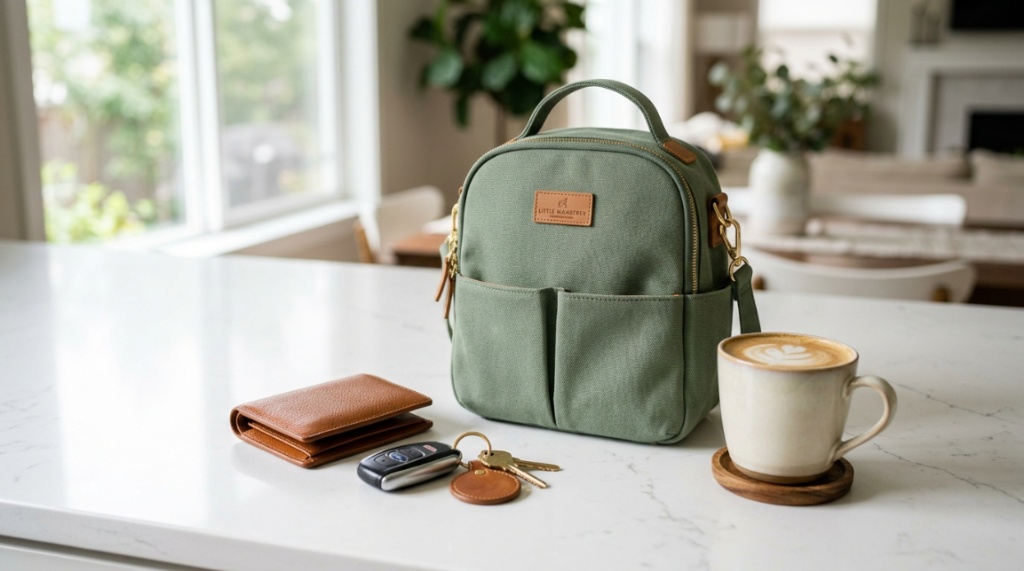
The transition is scary, but it can be done in one weekend with a “dry run” at home. Start by packing your mini bag and going for a 30-minute walk around the block near your house. Do not go to the mall yet. The goal is to build confidence in your ability to handle a minor mess with limited supplies.
Step 1: The “Purge” Session
Empty your current full-size bag onto the floor. Create three piles: Use Daily, Use Weekly, and Never Use. Be honest. Most parents find that 60% of the items in their big bag have not been touched in a month. Throw away the “Never Use” pile and put the “Weekly” pile in a drawer in the car.
Step 2: The “Test Run” at Home
Pack your mini bag exactly as you would for a trip. Now, pretend you are at the store and the baby spits up all over their onesie. Change the outfit on a stuffed animal or a doll. Then, pretend they blow out the diaper. This simulation takes 5 minutes and reveals whether you packed enough wipes and where the gaps are.
Step 3: The “Car Backup” Strategy
Place a small tote bag in the trunk of your car with 2 full diapers, a full pack of wipes, a spare outfit, and a blanket. This acts as your safety net. If you run into an emergency that your mini bag can’t handle, you know you can walk back to the car. This psychological safety net makes it easier to leave the heavy bag at home.
Is a Mini Diaper Bag Worth the Investment Compared to a Cheap Tote?
Yes, a purpose-built mini diaper bag is worth the money because of the internal organization. A cheap tote is just a sack; it negates all the benefits of downsizing because you will have to dump everything out to find a pacifier. Investing in a bag with specific pockets (bottle pocket, wipe pocket, key clip) saves you 10 minutes a day in frustration, which adds up to 60 hours a year.
Comparing Features: Mini Bag vs. Regular Tote
| Feature | Mini Diaper Bag | Regular Tote/Big Backpack |
|---|---|---|
| Weight Empty | 0.5–1 lb | 2–3 lbs |
| Bottle Holder | Insulated, upright | None/loose |
| Changing Pad | Included, scrunched | Extra purchase |
| Diaper Capacity | 2–4 | 8–10 |
| Ease of Access | 2 seconds | 10 seconds |
The Cost Per Use Calculation
If you use the mini bag 5 times a week for a year (260 uses) and it costs $60, that is $0.23 per trip. That is cheaper than a single coffee. If it saves you from buying a $20 toy to placate a meltdown because you found the snacks faster, it pays for itself in one afternoon.
When to Skip the Investment
If you are a “carry-everything” parent who refuses to downsize, do not buy a mini bag. You will just hate it and fight against its limitations. This system works best for parents who are ready to embrace minimalism and trust their ability to adapt.
Which Mini Diaper Bag Styles Are Best for Different Errand Types?
The best style depends on the errand. For a quick pharmacy run, a sling bag is perfect because it is zero-friction to grab. For a long trip to the mall where you will be walking a lot, a lightweight backpack distributes weight better. For a coffee date with a friend, a structured crossbody looks more like a purse and less like baby gear.
The “Speed” Sling for Quick In-and-Out
Use a sling bag (like a smaller version of a messenger bag) for trips under 30 minutes. You only need 1 diaper, a mini wipe case, and your wallet. This bag is too tiny for a bottle, so only use it if you are returning home quickly or if bottle feeding is not part of the schedule.
The “Hands-Free” Backpack for Long Walks
If your errand involves walking through a zoo or a farmers market, use a mini backpack. It leaves your shoulders symmetrical and allows you to carry a bottle of water. These come with more pockets (usually 4–6), which helps you organize the zones better.
The “Sleek” Crossbody for Daytime Socials
For lunches or playdates at a friend’s house, a crossbody with minimal branding looks professional. The key here is that it should easily slip under your arm and not look like a diaper bag at all. Some high-end versions mini diaper bag everyday errands come in faux leather, which wipes clean easily and looks like a designer bag.
How to Clean and Maintain Your Mini Diaper Bag for Longevity
A dirty bag harbors bacteria, and a stained bag makes you dread using it. Most mini bags are made of nylon, PVC, or canvas. You should spot-clean after every outing and deep-clean once a week. If you neglect this, the interior lining will degrade from leaked milk or crushed crackers.
The “Shake Out” Daily Routine
When you get home, do not just throw the bag on the floor. Open it upside down over a trash can and shake vigorously. Remove the wipes case and wipe the inside bottom with a disinfecting wipe. This takes 30 seconds and prevents the “crumby bag” syndrome that attracts ants and makes you dislike using it.
The “Deep Wash” Weekly Routine
Check the care label. Most nylon bags are machine washable on a gentle cycle. Put the bag inside a lingerie laundry bag to prevent straps from tangling. Use cold water and air dry only — never put it in the dryer, as heat will warp the plastic stabilizers that keep the shape.
Reviving a Smelly Bag
If the bag smells like sour milk, sprinkle baking soda inside, let it sit overnight, then vacuum it out. Do not use harsh chemical sprays because they will linger and may irritate your baby’s sensitive nose. Letting it air dry in the sun for 2 hours can also kill odor-causing bacteria naturally.
How to Adapt Your Mini Bag for Seasonal Changes (Summer vs. Winter)
Your mini bag contents must change with the seasons to remain useful. In the summer, you need sunblock and a hat. In the winter, you need mittens and a thicker onesie. Packing a heavy winter coat in a mini bag is impossible, so you pivot to wearing layers and packing only a vest.
Summer Substations: Swap, Don’t Add
Remove the insulated bottle insulator or use it for an ice pack. Swap the thick cotton onesie for a lightweight muslin one. Use a smaller sunscreen stick (instead of a bottle) that fits in the front pocket. The volume of a mini bag stays the same, but the density changes.
Winter Additions: The “Space Saving” Tricks
Use a space-saving compression pouch for the winter jacket. Squeeze out all the air so it takes 50% less space. For gloves, do not bring two pairs; use a pair of baby “mitten clips” that keep them attached to the stroller, so you don’t lose them and you don’t have to pack them.
Rainy Day Adjustments
Always carry a foldable stroller rain cover that squishes down to the size of a coin purse. This is non-negotiable in spring. In the mini bag, this goes flat at the bottom of the bag, acting as a cushion for the diapers.
Frequently Asked Questions
How long can a mini diaper bag last for errands?
A mini diaper bag is designed for outings lasting 2 to 4 hours. If you plan to be out longer than that (like a full day at the theme park), you should either bring a backup bag in the car or have a plan to buy supplies on the go.
Can a mini diaper bag fit an iPad or Kindle?
Most mini bags are too small for a standard iPad. However, they can fit a Kindle Paperwhite or a small tablet (7–8 inches) in the back slip pocket. If you need your iPad for sanity, choose a “medium” size that is slightly larger than the true mini, but still smaller than a standard bag.
Is it safe to use a mini bag for a newborn?
Yes, for errands with a newborn, you actually need less stuff because newborns sleep most of the time. You mainly need diapers, wipes, a swaddle, and a bottle. The only challenge is if you need to carry a pump—in that case, a mini bag might be too small.
What is the best way to pack a dirty diaper in a mini bag?
You do not pack dirty diapers. You carry a small pack of disposal bags (like dog poo bags) and tie the dirty diaper up immediately, then place it in your main trash can at the store. If no bin is available, store it in a double-sealed zip-lock bag in the outside pocket.
How do I stop the bottle from leaking in a small bag?
Store the bottle upright in an insulated pocket. If your bag lacks a pocket, store the bottle inside a leakproof wet bag. Always twist the ring lid off slightly to release pressure before zipping the bag, as pressure changes can cause leaks.
Your Next Step to a Lighter Load
The journey from a heavy, overstuffed diaper bag to a streamlined mini diaper bag for everyday errands is a process of trust and habit. You are not losing your preparedness; you are gaining freedom. You will walk into the grocery store with just a tiny sling over your shoulder, feeling a sense of lightness you have not felt in months. Your back will thank you, your toddler will be calmer because you are calmer, and you will realize that you never really needed that third burp cloth.
Start tonight. Purge your big bag. Pack your mini bag according to the zones listed above. Put the backup tote in the car. Tomorrow, try a short trip just to the pharmacy. Once you feel the joy of not wrestling with a behemoth bag, you will never go back. Do not wait until your next “big” trip—the time is now to reclaim your mobility and your sanity.
