


Youth fashion is a dynamic interplay between structure and individuality, with school uniforms and self-expressive clothing representing two ends of a spectrum. This article explores the tension between these approaches, delving into their history, current relevance, benefits, challenges, and future trends, supported by real-time insights and expert perspectives.
History of School Uniforms and Youth Fashion
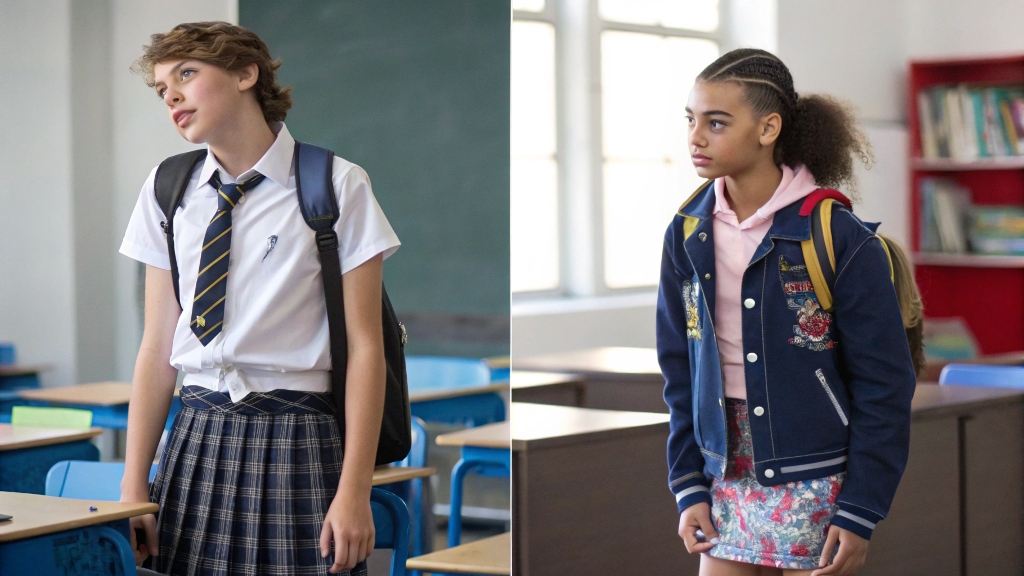
Origins of School Uniforms
School uniforms emerged in the 16th century in England, with institutions like Christ’s Hospital School introducing standardized dress to promote equality and discipline.
-
Early Purpose:
-
Fostered a sense of community and reduced socioeconomic distinctions.
-
Reflected institutional values, often tied to religious or moral codes.
-
-
Global Spread:
-
By the 19th century, uniforms became common in British colonies, influencing education systems in Asia, Africa, and the Americas.
-
Japan adopted uniforms (e.g., sailor suits) in the late 19th century, blending Western and local aesthetics.
-
Rise of Self-Expression in Youth Fashion
The 20th century saw youth fashion evolve as a form of rebellion and identity.
-
1950s–1960s:
-
Subcultures like mods, rockers, and hippies used fashion to challenge norms.
-
Icons like James Dean popularized jeans and leather jackets as symbols of defiance.
-
-
1980s–1990s:
-
MTV and pop culture amplified bold, individualistic styles (e.g., punk, grunge).
-
Streetwear emerged, with brands like Adidas and Nike becoming youth staples.
-
Current State of Uniforms and Self-Expression
Prevalence of School Uniforms
Uniforms remain widespread, particularly in private and public schools in countries like the UK, Japan, and parts of the US.
-
Global Adoption:
-
Approximately 20% of US public schools require uniforms (National Center for Education Statistics, 2023).
-
In Japan, over 90% of schools enforce uniforms, often with strict guidelines.
-
-
Variations:
-
Traditional: Blazers, ties, and skirts (e.g., UK, Australia).
-
Modern: Polo shirts and khakis for flexibility (e.g., US charter schools).
-
Self-Expression in Youth Fashion Today
Youth fashion is heavily influenced by social media, sustainability, and cultural inclusivity.
-
Social Media Impact:
-
Platforms like TikTok and Instagram drive trends like Y2K revival and cottagecore.
-
Influencers (e.g., Emma Chamberlain) promote eclectic, personalized styles.
-
-
Sustainability and Ethics:
-
Gen Z prioritizes eco-friendly brands (e.g., Depop, thrifted fashion).
-
68% of teens consider sustainability when purchasing clothes (Statista, 2024).
-
|
Aspect |
School Uniforms |
Self-Expressive Fashion |
|---|---|---|
|
Purpose |
Promote discipline, equality |
Showcase individuality, creativity |
|
Cost |
Often affordable, standardized |
Varies widely (thrifted to high-end) |
|
Social Impact |
Reduces visible class differences |
Can highlight socioeconomic disparities |
|
Flexibility |
Limited by school policies |
Highly customizable, trend-driven |
Key Concepts in the Debate
Uniforms: Structure and Conformity
Uniforms are designed to create a cohesive environment but can stifle creativity.
-
Psychological Effects:
-
Studies show uniforms improve focus and reduce bullying (Journal of School Psychology, 2022).
-
Critics argue they suppress identity, particularly for marginalized groups.
-
-
Gender and Inclusivity:
-
Traditional uniforms often enforce binary gender norms (e.g., skirts for girls).
-
Progressive schools now offer gender-neutral options (e.g., pants for all).
-
Self-Expression: Identity and Creativity
Self-expressive fashion allows youth to explore identity but faces practical challenges.
-
Cultural Significance:
-
Clothing reflects subcultures, ethnicities, and personal values.
-
Examples: Hijabs as cultural expression, punk aesthetics as rebellion.
-
-
Challenges:
-
Peer pressure to follow trends can lead to financial strain.
-
Schools without uniforms report higher incidents of dress code violations.
-
Benefits of Each Approach
Benefits of School Uniforms
-
Equality and Focus:
-
Minimize distractions from fashion trends or brand competition.
-
Reduce bullying based on clothing (e.g., 60% of teachers report fewer conflicts, EdWeek, 2023).
-
-
Cost-Effectiveness:
-
Uniforms are often cheaper than maintaining a trendy wardrobe.
-
Schools may subsidize costs for low-income families.
-
-
Sense of Belonging:
-
Foster school pride and community cohesion.
-
Benefits of Self-Expressive Fashion
-
Identity Development:
-
Allows youth to explore gender, culture, and personality through clothing.
-
Supports mental health by enabling authentic self-presentation.
-
-
Creativity and Innovation:
-
Encourages experimentation with DIY fashion and upcycling.
-
Drives economic growth in youth-focused fashion markets (e.g., streetwear worth $185 billion globally, Business of Fashion, 2024).
-
-
Cultural Representation:
-
Empowers marginalized groups to reclaim cultural symbols through fashion.
-
Challenges of Each Approach
Challenges of School Uniforms
-
Suppression of Individuality:
-
Can hinder self-esteem, especially for teens exploring identity.
-
LGBTQ+ students may feel restricted by gendered uniform policies.
-
-
Enforcement Issues:
-
Strict policies lead to disciplinary conflicts (e.g., suspensions for minor violations).
-
Inconsistent enforcement can create perceptions of bias.
-
-
Cultural Insensitivity:
-
Uniforms may conflict with cultural or religious attire (e.g., hijabs, traditional garments).
-
Challenges of Self-Expressive Fashion
-
Socioeconomic Disparities:
-
Trend-driven fashion can exclude low-income youth.
-
Pressure to keep up with fast fashion contributes to debt (e.g., 30% of Gen Z report fashion-related financial stress, Forbes, 2024).
-
-
School Environment:
-
Inappropriate clothing can disrupt learning (e.g., revealing outfits).
-
Dress codes often disproportionately target girls and minorities.
-
-
Environmental Impact:
-
Fast fashion contributes to 10% of global carbon emissions (UNEP, 2023).
-
Overconsumption clashes with sustainability values.
-
Future Trends in Youth Fashion
Evolving Uniform Policies
Schools are adapting uniforms to balance structure and expression.
-
Gender-Neutral Options:
-
UK and Australian schools increasingly offer unisex uniforms.
-
Example: Scotland’s 2021 guidance encourages flexible dress codes.
-
-
Customization:
-
Schools allow accessories or seasonal variations to reflect individuality.
-
Example: Japanese schools permit colorful socks or scarves.
-
Self-Expression and Technology
Technology is reshaping how youth express themselves through fashion.
-
Digital Fashion:
-
Virtual clothing for avatars (e.g., Roblox, Fortnite) is a $2 billion market (Vogue Business, 2025).
-
Reduces physical waste while enabling creativity.
-
-
AI and Personalization:
-
AI-driven design platforms (e.g., Stitch Fix) create custom outfits based on preferences.
-
AR apps allow virtual try-ons, blending self-expression with convenience.
-
-
Sustainable Innovation:
-
Biodegradable fabrics and 3D-printed clothing gain traction.
-
Brands like Pangaia use plant-based dyes, appealing to eco-conscious youth.
-
Review: Balancing Uniforms and Self-Expression
The debate between uniforms and self-expression reflects broader tensions between structure and freedom. Uniforms offer practical benefits like cost savings and reduced bullying but risk stifling identity, particularly for diverse or marginalized students. Self-expressive fashion fosters creativity and cultural pride but can exacerbate inequalities and environmental harm. Progressive schools are finding middle ground by adopting flexible, inclusive uniform policies, while youth leverage technology to redefine fashion’s boundaries.
Discover More: Spring Wedding Guest Style: What to Wear to Celebrate in Bloom
FAQs
1. Do school uniforms improve academic performance?
-
Research is mixed. A 2022 study in the Journal of School Psychology found uniforms improve focus in 65% of classrooms, but no direct link to grades exists. Self-expression may boost confidence, indirectly aiding performance.
2. How do uniforms affect mental health?
-
Uniforms can reduce social anxiety by minimizing peer judgment but may harm self-esteem if they restrict identity. Self-expressive clothing supports mental health for 70% of teens, per a 2024 Psychology Today survey.
3. Are uniforms more cost-effective than regular clothes?
-
Generally, yes. Uniforms cost $100–$200 annually, compared to $300–$500 for trendy wardrobes (Consumer Reports, 2023). However, fast fashion and thrifting can narrow this gap.
4. How do schools balance uniforms with cultural diversity?
-
Progressive schools allow exemptions for religious attire (e.g., hijabs) or offer gender-neutral options. However, inconsistent policies can lead to discrimination claims.
5. What role does social media play in youth fashion?
-
Platforms like TikTok drive micro-trends, with 80% of Gen Z citing social media as their primary fashion inspiration (Statista, 2024). This amplifies self-expression but fuels fast fashion consumption.
Read More Also: NFT Fashion in the Metaverse: A Comprehensive Exploration
Conclusions
The uniforms vs. self-expression debate in youth fashion is not binary but a spectrum where both approaches offer value and challenges. Uniforms provide structure and equity but must evolve to embrace diversity and individuality. Self-expressive fashion empowers youth but requires sustainable practices to mitigate environmental and social costs. As schools adopt inclusive policies and technology reshapes fashion, the future lies in hybrid models that honor both discipline and creativity, ensuring youth can express themselves while thriving in structured environments.
