


Choosing an engagement ring represents one of the most meaningful purchases you’ll ever make. However, the traditional diamond market has convinced many couples that they must spend months of salary to prove their love. Fortunately, moissanite offers a stunning alternative that delivers exceptional beauty without the inflated price tag.
Moissanite has gained tremendous popularity among savvy shoppers who want a brilliant, eye-catching ring without the financial burden. This gemstone rivals diamonds in sparkle and durability while costing a fraction of the price. Understanding how to select and purchase moissanite wisely ensures you get the best value for your investment.
This comprehensive guide will walk you through everything you need to know about buying moissanite engagement rings. You’ll learn about quality factors, pricing structures, and common pitfalls that cause buyers to overpay. By the end, you’ll have the knowledge to make an informed decision that balances beauty, quality, and budget.
Understanding What Moissanite Actually Is
Before diving into selection strategies, it’s important to understand what moissanite is and why it makes an excellent choice for engagement rings. This knowledge helps you appreciate its value and spot potential misrepresentations from sellers.
Moissanite is a naturally occurring mineral discovered in 1893 by French scientist Henri Moissan. He found tiny crystals in a meteor crater in Arizona. However, natural moissanite is incredibly rare. Therefore, all moissanite used in jewelry today is created in laboratories through advanced technological processes.
Lab-created moissanite isn’t an imitation or fake gemstone. It’s a genuine mineral with its own unique properties and chemical composition. The controlled laboratory environment actually produces higher quality stones than nature ever could, with better clarity and more consistent coloring.
This gemstone scores 9.25 on the Mohs hardness scale, making it one of the hardest substances on Earth. Only diamonds rank higher at a 10. This exceptional hardness means moissanite resists scratching and maintains its brilliance through decades of daily wear.
Additionally, moissanite displays more fire than diamonds. Fire refers to the colored flashes of light you see when the stone catches light. This extra sparkle makes moissanite particularly eye-catching and distinctive.
Why Moissanite Costs Less Than Diamonds
Understanding the price difference between moissanite and diamonds helps you appreciate the value proposition. The lower cost doesn’t reflect inferior quality but rather different market economics and production methods.
Diamond prices are heavily influenced by marketing, artificial scarcity, and complex distribution networks. The diamond industry has spent billions creating the perception that diamonds are rare and necessary for engagement rings. However, diamonds are not actually as rare as marketing suggests.
Moissanite production is more efficient and straightforward. Creating moissanite in a laboratory eliminates mining costs, reduces environmental impact, and streamlines distribution. These factors translate directly into lower prices for consumers.
Moreover, moissanite doesn’t carry the same markup structure as diamonds. There’s no tradition of inflated retail pricing or the expectation that buyers should spend specific percentages of their income. Sellers compete more on value and service rather than brand prestige alone.
The absence of speculative investment value also keeps moissanite prices stable and reasonable. Unlike diamonds, which some people buy as investments, moissanite is purchased primarily for its beauty and wearability. This practical approach benefits consumers looking for affordable engagement stones.
Evaluating Moissanite Quality Factors
Just like diamonds, moissanite comes in different quality grades. Knowing how to evaluate these factors prevents you from overpaying for features that don’t significantly impact appearance or settling for lower quality than you deserve.
Color is the first consideration. Moissanite ranges from colorless to slightly tinted. Premium colorless moissanite appears just like the finest diamonds, while near-colorless options offer excellent value with minimal visible difference. Avoid stones with yellow or gray tints unless you specifically want that look.
Clarity refers to internal characteristics and surface imperfections. Most moissanite is created with excellent clarity, far superior to the average diamond at comparable prices. Look for stones graded as eye-clean, meaning you can’t see inclusions without magnification. Paying extra for flawless grades rarely makes sense since the difference isn’t visible during normal wear.
Cut quality dramatically affects how brilliant and fiery your stone appears. A well-cut moissanite maximizes light return and creates stunning visual effects. Poor cuts result in dull stones regardless of other quality factors. Therefore, prioritize cut quality over size when making trade-offs.
Size is measured in millimeters for moissanite rather than carats, since moissanite weighs less than diamonds. A 6.5mm moissanite appears the same size as a one-carat diamond but weighs less. Make sure you’re comparing based on visual size rather than weight to get accurate value assessments.
Polish and symmetry affect the overall finish and light performance. Excellent grades in these areas ensure your stone looks crisp and brilliant. However, very good grades often perform nearly identically at lower prices.
Identifying Fair Pricing Structures
Understanding typical moissanite pricing helps you recognize good deals and avoid overpaying. Prices vary based on several factors, but general patterns exist across reputable sellers.
Size has the most significant impact on price. Smaller stones cost less per millimeter, while larger stones command premium prices. However, the price increase isn’t linear. Moving from a 6.5mm to a 7.5mm stone doesn’t simply add the difference in material cost. Larger stones require more time and expertise to create, resulting in steeper price curves.
Quality grades affect pricing, though less dramatically than with diamonds. The jump from near-colorless to colorless moissanite might add 20 to 30 percent to the price. Compare this to diamonds, where color grade changes can double or triple costs. This moderate pricing makes it easier to choose higher grades without breaking your budget.
Brand names command different price points. Some companies charge significantly more for the same quality moissanite simply because of their marketing and reputation. While these brands might offer excellent customer service, the stones themselves often come from the same manufacturers as less expensive options.
Setting costs vary widely based on metal choice and complexity. A simple solitaire in 14k gold might cost several hundred dollars, while an intricate halo design in platinum could exceed two thousand. Remember that you can always upgrade your setting later, so consider starting with a quality stone in a modest setting if budget is tight.
Custom design versus pre-made settings present different value propositions. Custom work costs more but delivers exactly what you envision. Pre-made settings offer immediate availability and often lower prices through economies of scale. Neither option is inherently better, but understanding the trade-offs helps you choose wisely.
Comparing Online Versus Local Purchases
Where you buy your moissanite engagement ring significantly impacts both price and experience. Each option offers distinct advantages and potential drawbacks that affect overall value.
Online retailers typically offer lower prices due to reduced overhead costs. They don’t maintain expensive showrooms or large sales staffs. These savings pass directly to customers through competitive pricing. Additionally, online sellers often provide detailed specifications, photographs, and videos that help you make informed decisions.
However, buying online means you can’t see the ring in person before purchase. While high-quality photos help, nothing replaces examining a ring yourself. Colors might appear different on your computer screen than in natural light. Furthermore, sizing can be tricky without trying the ring on first.
Local jewelers provide hands-on experience and personalized service. You can see exactly what you’re buying, try different styles, and get immediate sizing. Building a relationship with a local jeweler also gives you a resource for future maintenance, repairs, and upgrades.
The downside of local shopping is typically higher prices. Brick-and-mortar stores have significant overhead that they must recoup through higher margins. Some local jewelers also carry limited moissanite selections, focusing instead on traditional diamonds where their profit margins are larger.
Many smart shoppers combine both approaches. They visit local stores to try on styles and determine their preferences, then shop online for better pricing. This strategy works well if you’re comfortable with the potential sizing adjustments needed when buying remotely.
Avoiding Common Overpayment Traps
Several common mistakes cause buyers to pay more than necessary for their moissanite engagement rings. Being aware of these pitfalls helps you avoid them and maximize your value.
Confusing marketing terms with actual quality measures is a frequent problem. Terms like “premium” or “deluxe” sound impressive but may not reflect any standardized grading. Always ask for specific grades in color, clarity, and cut rather than accepting vague marketing language.
Paying for unnecessary certifications adds costs without adding value. While certifications from reputable gemological laboratories provide useful information, some sellers charge hefty fees for their own in-house certificates that carry little weight. Focus on the actual stone characteristics rather than fancy paperwork.
Buying the wrong metal for your budget is another common mistake. Platinum costs significantly more than gold but doesn’t make your moissanite any more beautiful. If budget is a concern, choosing 14k or even 10k gold for your setting saves money that you can put toward a larger or higher-quality stone.
Overvaluing brand names without comparing actual quality can cost you hundreds or thousands unnecessarily. Some heavily marketed brands charge two or three times what other reputable sellers charge for chemically identical stones. Research the actual manufacturer and quality specifications rather than relying on brand recognition alone.
Rushing the purchase due to engagement pressure often leads to poor decisions. Take time to research, compare options, and find the best value. The right ring will still be available next month, and the knowledge you gain through careful shopping pays dividends.
Understanding Different Moissanite Grades
Not all moissanite is created equal, and understanding the different grades available helps you make informed comparisons. These grades represent different levels of color and clarity that affect both appearance and price.
Classic moissanite represents the original formulation with a slight yellow or gray tint. While noticeably colored compared to colorless options, classic moissanite still sparkles beautifully and costs significantly less. This grade works well for those on tight budgets or who prefer warmer-toned jewelry.
Near-colorless moissanite eliminates most visible tinting, appearing white in most lighting conditions. This grade offers excellent value, as the subtle color difference from colorless grades is difficult for most people to detect without direct comparison. Consider this grade if you’re balancing quality and budget.
Colorless moissanite represents the premium option that most closely resembles top-grade diamonds. These stones show no yellow or gray tinting even under scrutiny. The price premium over near-colorless grades is moderate, making colorless moissanite an attractive option for those who want the very best appearance.
Some manufacturers offer super colorless or premium colorless grades. These represent the absolute highest quality with perfect color grading. However, the visual difference from standard colorless grades is negligible. Unless you have an unlimited budget, spending extra for these top grades rarely makes practical sense.
Additionally, you might encounter different cutting styles that affect brilliance and fire. Hearts and arrows cuts display particular light patterns that some buyers prefer. Crushed ice cuts create a different sparkle pattern that looks more organic. Neither is objectively better, but knowing your preference helps you find the right stone.
Selecting the Right Setting Style
The setting you choose affects both the final appearance and the overall cost of your ring. Understanding different styles helps you make decisions that maximize beauty while controlling expenses.
Solitaire settings showcase the center stone without competing elements. They’re classic, timeless, and typically cost less than more elaborate designs. A solitaire lets your moissanite take center stage, highlighting its natural brilliance and fire. This style works particularly well with larger stones that don’t need additional elements to create impact.
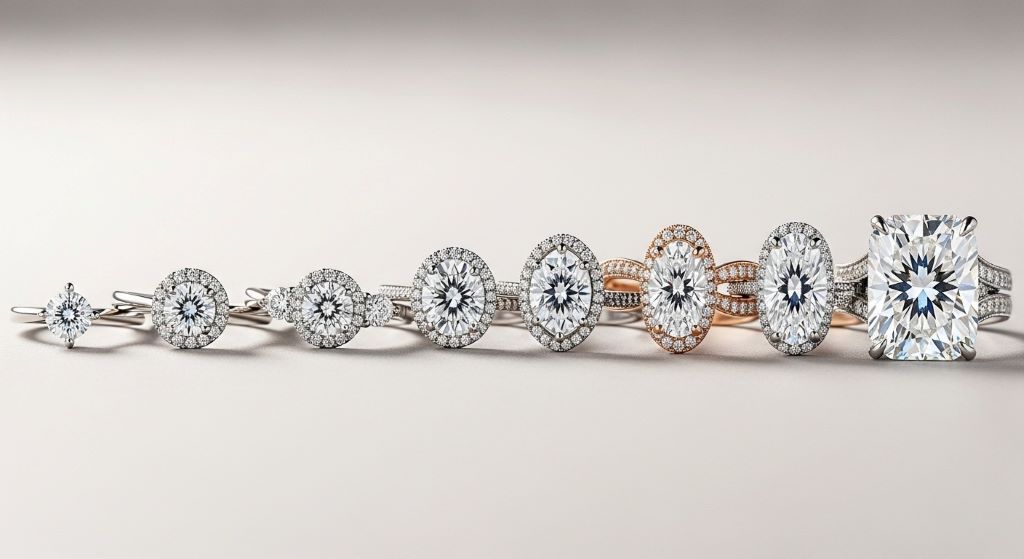
Halo settings surround the center stone with smaller gems, making it appear larger and adding extra sparkle. Halos can use small diamonds, moissanite, or other durable gemstones as accent stones. While beautiful, halos add significant cost and require more maintenance over time as the small stones may loosen.
Three-stone designs symbolize past, present, and future, with the center stone flanked by two smaller stones. This style provides visual interest without the maintenance concerns of halos. Using moissanite for all three stones keeps costs reasonable while creating a stunning overall effect.
Vintage-inspired settings incorporate detailed metalwork, milgrain edges, and often additional small stones. These romantic designs create unique looks but typically cost more due to the additional craftsmanship required. If you love vintage aesthetics, consider simpler vintage-inspired details rather than fully elaborate designs to control costs.
Modern minimalist settings emphasize clean lines and simple elegance. Tension settings, bezel settings, and sleek bands fall into this category. These contemporary styles often cost less due to using less metal and simpler construction, making them excellent choices for budget-conscious buyers.
Considering Long-Term Value and Durability
When selecting moissanite, think beyond the initial purchase to long-term value and durability. Durable gemstones that maintain their beauty for decades provide better overall value than stones requiring frequent replacement or repair.
Moissanite’s exceptional hardness means it resists scratching from normal wear far better than most gemstones. This durability is crucial for engagement rings, which are worn daily and exposed to countless potential hazards. You won’t need to worry about your stone losing its polish or developing visible wear over time.
The thermal stability of moissanite also contributes to its longevity. Sudden temperature changes don’t affect it, making it safe to wear while cooking, in hot tubs, or during other activities where temperature fluctuations occur. This stability eliminates the careful handling required with some other gemstones.
Color stability ensures your moissanite maintains its appearance indefinitely. Unlike some gemstones that can fade or change color with sun exposure, modern colorless moissanite remains perfectly clear throughout its lifetime. This permanence means your ring looks as beautiful on your fiftieth anniversary as it did the day you purchased it.
The widespread availability of moissanite makes future repairs, remounting, or upgrades straightforward. Any jeweler familiar with the stone can work with it safely. Furthermore, if you ever want to upgrade to a larger stone, you can often sell or trade your original moissanite relatively easily.
Insurance costs are typically lower for moissanite than diamonds of similar appearance. This ongoing savings adds up over decades of ownership. Additionally, some people feel more comfortable wearing their moissanite ring in situations where they might leave a diamond ring at home for security reasons.
Timing Your Purchase for Best Value
Strategic timing can save you significant money on your moissanite engagement ring purchase. Understanding when to buy helps you take advantage of sales and promotional periods.
Holiday sales events often bring substantial discounts from online retailers. Black Friday, Cyber Monday, and Valentine’s Day frequently feature promotions on engagement rings. Planning your purchase around these events can save 15 to 30 percent or more.
End-of-year clearance sales help retailers clear inventory before introducing new designs. December and January often feature excellent deals as jewelers make room for spring collections. If you’re flexible on specific style details, clearance shopping offers tremendous value.
Summer months traditionally see lower engagement ring sales, leading some retailers to offer promotions during these slower periods. June through August might bring unexpected deals as jewelers try to boost revenue during traditionally quiet times.
However, don’t let timing concerns push you into buying something that isn’t quite right. Saving money on a ring you’re not completely happy with ultimately provides poor value. Use sales strategically when they align with finding your ideal ring, but don’t compromise your vision just to catch a promotion.
Some retailers offer loyalty programs or email list benefits that provide exclusive discounts. Signing up for newsletters from your preferred sellers often brings early access to sales or special promotional codes. These small advantages can add up to meaningful savings.
Verifying Seller Reputation and Policies
Protecting yourself from unreliable sellers is crucial when buying moissanite. Thorough vetting ensures you receive the quality you paid for and have recourse if problems arise.
Check independent reviews from multiple sources. While seller websites might display selected positive reviews, independent platforms like consumer review sites provide more balanced perspectives. Look for patterns in complaints or praise rather than focusing on individual extreme reviews.
Verify return policies before purchasing. Reputable sellers offer reasonable return windows that let you examine the ring and ensure it meets your expectations. Policies requiring returns within just a few days or charging heavy restocking fees should raise concerns.
Understand warranty coverage for both the stone and setting. Good warranties protect against manufacturing defects and may offer free sizing, cleaning, or minor repairs. Lifetime warranties sound impressive but read the fine print to understand what’s actually covered and what exclusions apply.
Payment security matters when spending significant money online. Use credit cards rather than debit cards for better fraud protection. Verify that the website uses secure payment processing and never send money through unsecured methods like wire transfers or cryptocurrency.
Ask about upgrade policies if you think you might want to trade up later. Some jewelers offer generous upgrade programs where your purchase price applies toward a future ring. These programs provide flexibility as your circumstances or preferences change over time.
Conclusion
Selecting a moissanite engagement ring without overpaying requires knowledge, patience, and strategic shopping. Understanding quality factors like color, clarity, and cut helps you make informed decisions about which characteristics matter most. Recognizing fair pricing structures and comparing options across multiple sellers ensures you get the best value for your budget.
Moissanite offers an exceptional combination of beauty and durability that rivals traditional diamonds at a fraction of the cost. Its status as one of the hardest substances available makes it ideal for everyday wear, while its superior fire creates distinctive sparkle that catches every eye. These qualities make moissanite an intelligent choice for couples seeking affordable engagement stones that don’t compromise on appearance or longevity.
Avoiding common overpayment traps like inflated brand premiums, unnecessary certifications, and rushed decisions protects your budget. Taking time to research sellers, understand different grades, and compare options ensures you find the perfect ring at the right price. Remember that the setting can always be upgraded later, so prioritize stone quality within your budget.
The most important factor is choosing a ring that you’ll love wearing for decades to come. Moissanite provides that lasting beauty and durability while keeping your finances healthy. By following the guidance in this article, you can confidently select a stunning engagement ring that symbolizes your love without the financial stress that often accompanies this important purchase.
Frequently Asked Questions
Will people be able to tell my moissanite isn’t a diamond?
Most people cannot distinguish between moissanite and diamonds without specialized equipment. Moissanite actually displays more fire and brilliance than diamonds, which some observers might notice as extra sparkle. However, this typically reads as an especially beautiful diamond rather than a different stone. Only trained gemologists using specific tools can definitively identify moissanite. What matters most is that you love your ring, not what others might think about the stone type.
How much should I expect to pay for a quality moissanite engagement ring?
A complete moissanite engagement ring typically costs between 500 and 2,500 dollars depending on stone size, quality grade, and setting complexity. A one-carat equivalent colorless moissanite in a simple gold solitaire setting usually falls in the 800 to 1,200 dollar range. Larger stones, platinum settings, or elaborate designs increase the price. However, even premium moissanite rings rarely exceed 3,000 dollars, which is significantly less than comparable diamond rings.
Does moissanite require special care or maintenance?
Moissanite requires the same basic care as diamonds and other fine jewelry. Clean it regularly with warm water, mild soap, and a soft brush to maintain its brilliance. Professional cleaning and inspection once or twice yearly ensures the setting remains secure. Unlike some gemstones, moissanite doesn’t require special handling or protection from normal activities. Its exceptional hardness and stability make it one of the most low-maintenance options for everyday wear.
Can I upgrade my moissanite to a larger stone later?
Yes, upgrading moissanite is straightforward and affordable. Many jewelers offer upgrade programs where your original purchase price applies toward a new stone. Since moissanite costs much less than diamonds, upgrading to a significantly larger stone remains budget-friendly. You can keep your original setting and simply have the new stone mounted, or choose an entirely new ring design. This flexibility makes moissanite an excellent choice for couples who anticipate wanting to upgrade in the future.
Are there any disadvantages to choosing moissanite over diamonds?
The main consideration is resale value. Diamonds maintain some resale value in the secondary market, while moissanite has limited resale potential. However, since engagement rings are meant to be kept rather than sold, this rarely matters in practice. Some people prefer the tradition and symbolism associated with diamonds. Additionally, moissanite’s extra fire creates a slightly different appearance that some people prefer while others favor diamond’s more subtle sparkle. These are matters of personal preference rather than inherent disadvantages.
Related Topics:
8 Summer Wedding Trends You Will Love
What is a solitaire ring and what is it for?
